
 Image 1 of 1
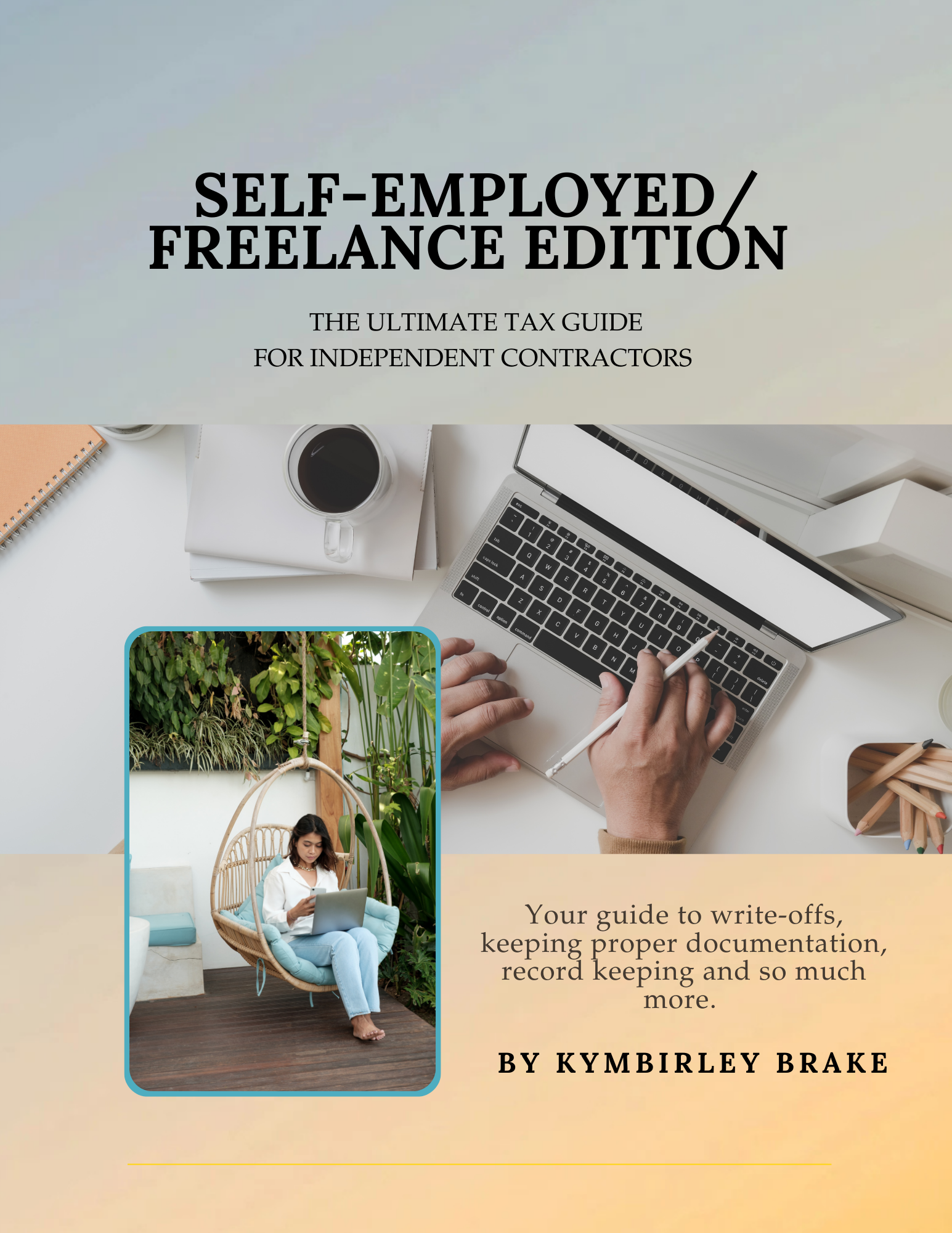
Freelance/Self-Employed Tax Tips eBook
The tax guide I wish every freelancer had before they started making money.
You started freelancing because you wanted more freedom.
Then somebody handed you a 1099 and suddenly you're supposed to know about quarterly taxes, business write-offs, bookkeeping, mileage, home office deductions, EINs, business licenses and whether you need an LLC.
Cute.
The Self-Employed Freelance Tax Guide breaks down the tax and business basics every freelancer, independent contractor and new self-employed business owner should understand.
No accounting degree required. No 400-page IRS publication. And no waiting until April to find out you were supposed to be doing something all year.
I started my own freelance career as a bookkeeper before eventually building OC Tax Brake, so I know there’s a big difference between knowing how to do the work you get paid for and knowing how to run the business behind it.
This guide helps close that gap.
WHAT HAPPENS TO YOUR TAXES WHEN YOU BECOME SELF-EMPLOYED?
When you're an employee, somebody else handles a lot of the boring stuff.
When you're self-employed? Congratulations. A lot of that is now your job.
The guide walks you through what it actually means to work for yourself and the tax responsibilities that can come with freelance and independent contractor income.
You'll learn about things like EINs, DBAs, business licenses, W-9s, 1099s, separate business banking, tracking income and expenses, sales tax considerations and quarterly estimated taxes.
Basically, the stuff nobody explained when you decided to turn your skill, side hustle or freelance work into actual income.
WHAT CAN FREELANCERS WRITE OFF?
This is usually the part everyone wants to skip to. And I get it.
Business deductions can reduce your taxable business income when they're legitimate expenses connected to operating your business. But starting a business doesn't mean everything you buy is suddenly deductible.
The guide walks through common self-employed business expense categories including:
Advertising
Business use of your vehicle
Contract labor
Equipment
Apps and software
Office expenses
Professional services
Insurance
Rent
Supplies
Business travel
Business meals
Utilities
Telephone expenses
Home office expenses
Website costs
Technology and electronics
Education and continuing education
Dues and subscriptions
Bookkeeping and tax fees
Business licenses and permits
Postage
Startup and organizational costs
And more
The important part isn't memorizing a giant list of tax deductions but learning to ask: Was this actually for my business?
WHAT ABOUT MY CAR?
If you're driving for business, there may be deductible vehicle expenses involved.
The guide introduces the two basic approaches freelancers may encounter—standard mileage and actual vehicle expenses—and explains why separating your business use from personal use matters.
Because “I use my car for work” and “100% business vehicle” are two very different statements.
CAN I DEDUCT MY HOME OFFICE?
Working from your couch occasionally doesn't automatically make your living room a home office deduction.
The guide walks through the basic idea behind home office expenses, including exclusive business use and the difference between direct and indirect expenses.
If you're building your business from home, this is something worth understanding before tax time.
YES, YOU NEED TO KEEP THE RECEIPTS.
You know what's less fun than keeping tax records?
Trying to recreate an entire year of them after the fact.
Documentation is one of the most important habits you can build when you're self-employed.
You'll learn what kinds of records you should consider keeping, including receipts, invoices, bills, canceled checks, 1099s, travel records, employment records and other supporting documents.
You'll also learn what information can matter beyond simply having a receipt, including the date, amount, business purpose and other details surrounding the transaction.
Your credit card statement tells me what you bought. It doesn't always tell me why your business bought it.
KEEP YOUR BUSINESS MONEY OUT OF YOUR PERSONAL MESS.
I cannot say this enough:
Stop commingling your business and personal money.
Having separate business banking makes your bookkeeping cleaner, helps you understand what's actually happening financially and makes it much easier to distinguish legitimate business expenses from the Target run where you also bought shampoo and Halloween candy.
The guide covers basic bookkeeping habits and recordkeeping so you're not handing your tax preparer a shoebox—or the digital equivalent of one—at the end of the year.
HOW LONG SHOULD FREELANCERS KEEP TAX RECORDS?
Receipts aren't Pokémon cards. You don't necessarily need to collect every piece of paper you've ever touched for eternity.
But you do need to understand which tax and business records should be retained and why.
The guide covers record retention for tax documents, accounting records, operational records, employment-related documents and important permanent business records.
Translation:
Know what you can eventually get rid of and what should never meet the shredder.
DO I NEED AN LLC?
Please don't create an LLC just because somebody on Instagram told you that “real business owners have LLCs.”
Your business structure should have a reason behind it. The guide introduces the differences between common business structures, including:
Sole proprietorships
Single-member LLCs
Multi-member LLCs
Partnerships
S Corporations
C Corporations
You'll also see how certain business structures connect to your personal tax return and why choosing an entity shouldn't be based on whatever your business bestie filed last year.
An LLC isn't a personality trait. Choose your structure based on your actual business.
THIS GUIDE IS FOR YOU IF…
You're starting a freelance business.
You have a side hustle that's starting to make real money.
You're an independent contractor receiving 1099 income.
You left your W-2 job and realized nobody explained what happens next.
You're making money online and aren't sure what you're supposed to be tracking.
You keep hearing about quarterly taxes but have no idea what they are.
You don't know which freelance expenses may be tax deductible.
You're wondering whether you need an EIN, DBA, LLC or S Corporation.
Your bookkeeping system is currently a checking account and vibes.
Or you've been self-employed for a while and would really like to know whether you're doing any of this correctly.
QUESTIONS THIS GUIDE HELPS YOU ANSWER
How do taxes work when you're self-employed?
What tax deductions can freelancers take?
What expenses can independent contractors write off?
Do freelancers need to pay quarterly taxes?
What records should I keep for self-employed taxes?
Can I deduct my home office?
Can I deduct mileage or vehicle expenses?
What's the difference between a sole proprietor and an LLC?
Should a freelancer form an S Corporation?
Do I need a separate business bank account?
How long should I keep business receipts and tax records?
If you've been Googling some version of those questions at 11 p.m., this guide was made for you.
MEET KYM
I'm Kym Brake, founder of OC Tax Brake. I have a BA in Accounting, an LLM in Tax Law and more than 20 years of experience in the tax industry.
But I also started as a freelancer. I built my career around the flexibility self-employment gave me as a mom while learning firsthand what it takes to actually run the business behind the work.
That's why I don't want new freelancers learning about taxes when something goes wrong. I want you to understand the basics while you're building the business.
Make the money.
Keep the records.
Know what you're spending.
Understand your tax responsibilities.
And please stop mixing your grocery money with your business account.
YOU KNOW HOW TO DO THE WORK. NOW LEARN HOW TO RUN THE BUSINESS BEHIND IT.
Freelancing gives you freedom.
It also makes you the owner, accounting department, operations department and person responsible for figuring out what the hell estimated taxes are.
You don't have to become a tax expert.
You do need to understand enough to make smarter decisions with your money and know when it's time to bring in professional help.
Get the Self-Employed Freelance Tax Guide and start treating your freelance income like the business it is.
GET THE FREELANCE TAX GUIDE
Instant digital download.
For educational purposes only. This guide is not individualized legal, financial or tax advice. Tax rules and requirements depend on your circumstances and can change. Consult a qualified tax professional regarding your specific situation.
The tax guide I wish every freelancer had before they started making money.
You started freelancing because you wanted more freedom.
Then somebody handed you a 1099 and suddenly you're supposed to know about quarterly taxes, business write-offs, bookkeeping, mileage, home office deductions, EINs, business licenses and whether you need an LLC.
Cute.
The Self-Employed Freelance Tax Guide breaks down the tax and business basics every freelancer, independent contractor and new self-employed business owner should understand.
No accounting degree required. No 400-page IRS publication. And no waiting until April to find out you were supposed to be doing something all year.
I started my own freelance career as a bookkeeper before eventually building OC Tax Brake, so I know there’s a big difference between knowing how to do the work you get paid for and knowing how to run the business behind it.
This guide helps close that gap.
WHAT HAPPENS TO YOUR TAXES WHEN YOU BECOME SELF-EMPLOYED?
When you're an employee, somebody else handles a lot of the boring stuff.
When you're self-employed? Congratulations. A lot of that is now your job.
The guide walks you through what it actually means to work for yourself and the tax responsibilities that can come with freelance and independent contractor income.
You'll learn about things like EINs, DBAs, business licenses, W-9s, 1099s, separate business banking, tracking income and expenses, sales tax considerations and quarterly estimated taxes.
Basically, the stuff nobody explained when you decided to turn your skill, side hustle or freelance work into actual income.
WHAT CAN FREELANCERS WRITE OFF?
This is usually the part everyone wants to skip to. And I get it.
Business deductions can reduce your taxable business income when they're legitimate expenses connected to operating your business. But starting a business doesn't mean everything you buy is suddenly deductible.
The guide walks through common self-employed business expense categories including:
Advertising
Business use of your vehicle
Contract labor
Equipment
Apps and software
Office expenses
Professional services
Insurance
Rent
Supplies
Business travel
Business meals
Utilities
Telephone expenses
Home office expenses
Website costs
Technology and electronics
Education and continuing education
Dues and subscriptions
Bookkeeping and tax fees
Business licenses and permits
Postage
Startup and organizational costs
And more
The important part isn't memorizing a giant list of tax deductions but learning to ask: Was this actually for my business?
WHAT ABOUT MY CAR?
If you're driving for business, there may be deductible vehicle expenses involved.
The guide introduces the two basic approaches freelancers may encounter—standard mileage and actual vehicle expenses—and explains why separating your business use from personal use matters.
Because “I use my car for work” and “100% business vehicle” are two very different statements.
CAN I DEDUCT MY HOME OFFICE?
Working from your couch occasionally doesn't automatically make your living room a home office deduction.
The guide walks through the basic idea behind home office expenses, including exclusive business use and the difference between direct and indirect expenses.
If you're building your business from home, this is something worth understanding before tax time.
YES, YOU NEED TO KEEP THE RECEIPTS.
You know what's less fun than keeping tax records?
Trying to recreate an entire year of them after the fact.
Documentation is one of the most important habits you can build when you're self-employed.
You'll learn what kinds of records you should consider keeping, including receipts, invoices, bills, canceled checks, 1099s, travel records, employment records and other supporting documents.
You'll also learn what information can matter beyond simply having a receipt, including the date, amount, business purpose and other details surrounding the transaction.
Your credit card statement tells me what you bought. It doesn't always tell me why your business bought it.
KEEP YOUR BUSINESS MONEY OUT OF YOUR PERSONAL MESS.
I cannot say this enough:
Stop commingling your business and personal money.
Having separate business banking makes your bookkeeping cleaner, helps you understand what's actually happening financially and makes it much easier to distinguish legitimate business expenses from the Target run where you also bought shampoo and Halloween candy.
The guide covers basic bookkeeping habits and recordkeeping so you're not handing your tax preparer a shoebox—or the digital equivalent of one—at the end of the year.
HOW LONG SHOULD FREELANCERS KEEP TAX RECORDS?
Receipts aren't Pokémon cards. You don't necessarily need to collect every piece of paper you've ever touched for eternity.
But you do need to understand which tax and business records should be retained and why.
The guide covers record retention for tax documents, accounting records, operational records, employment-related documents and important permanent business records.
Translation:
Know what you can eventually get rid of and what should never meet the shredder.
DO I NEED AN LLC?
Please don't create an LLC just because somebody on Instagram told you that “real business owners have LLCs.”
Your business structure should have a reason behind it. The guide introduces the differences between common business structures, including:
Sole proprietorships
Single-member LLCs
Multi-member LLCs
Partnerships
S Corporations
C Corporations
You'll also see how certain business structures connect to your personal tax return and why choosing an entity shouldn't be based on whatever your business bestie filed last year.
An LLC isn't a personality trait. Choose your structure based on your actual business.
THIS GUIDE IS FOR YOU IF…
You're starting a freelance business.
You have a side hustle that's starting to make real money.
You're an independent contractor receiving 1099 income.
You left your W-2 job and realized nobody explained what happens next.
You're making money online and aren't sure what you're supposed to be tracking.
You keep hearing about quarterly taxes but have no idea what they are.
You don't know which freelance expenses may be tax deductible.
You're wondering whether you need an EIN, DBA, LLC or S Corporation.
Your bookkeeping system is currently a checking account and vibes.
Or you've been self-employed for a while and would really like to know whether you're doing any of this correctly.
QUESTIONS THIS GUIDE HELPS YOU ANSWER
How do taxes work when you're self-employed?
What tax deductions can freelancers take?
What expenses can independent contractors write off?
Do freelancers need to pay quarterly taxes?
What records should I keep for self-employed taxes?
Can I deduct my home office?
Can I deduct mileage or vehicle expenses?
What's the difference between a sole proprietor and an LLC?
Should a freelancer form an S Corporation?
Do I need a separate business bank account?
How long should I keep business receipts and tax records?
If you've been Googling some version of those questions at 11 p.m., this guide was made for you.
MEET KYM
I'm Kym Brake, founder of OC Tax Brake. I have a BA in Accounting, an LLM in Tax Law and more than 20 years of experience in the tax industry.
But I also started as a freelancer. I built my career around the flexibility self-employment gave me as a mom while learning firsthand what it takes to actually run the business behind the work.
That's why I don't want new freelancers learning about taxes when something goes wrong. I want you to understand the basics while you're building the business.
Make the money.
Keep the records.
Know what you're spending.
Understand your tax responsibilities.
And please stop mixing your grocery money with your business account.
YOU KNOW HOW TO DO THE WORK. NOW LEARN HOW TO RUN THE BUSINESS BEHIND IT.
Freelancing gives you freedom.
It also makes you the owner, accounting department, operations department and person responsible for figuring out what the hell estimated taxes are.
You don't have to become a tax expert.
You do need to understand enough to make smarter decisions with your money and know when it's time to bring in professional help.
Get the Self-Employed Freelance Tax Guide and start treating your freelance income like the business it is.
GET THE FREELANCE TAX GUIDE
Instant digital download.
For educational purposes only. This guide is not individualized legal, financial or tax advice. Tax rules and requirements depend on your circumstances and can change. Consult a qualified tax professional regarding your specific situation.